
Why Do Industrial Filters Fail?
Industrial filtration systems are designed to protect equipment, improve production efficiency, and maintain stable operating conditions. From hydraulic systems and turbine oil purification units to compressed air systems and chemical processing equipment, filters play a critical role in removing unwanted particles, contaminants, moisture, and impurities.
However, even a high-quality filter element may fail to achieve its expected service life if problems occur during selection, installation, operation, or maintenance. Unexpected filter failure can lead to reduced equipment performance, increased operating costs, production interruptions, and even damage to important components.
Understanding why industrial filters fail allows users to select more suitable filtration solutions and improve the reliability of their filtration systems.
Incorrect Application Matching Can Reduce Filter Performance
One of the most common reasons for industrial filter failure is selecting a filter that does not match the actual working conditions. Different applications require different filter structures, materials, and performance characteristics.
For example, hydraulic systems usually require filter elements with excellent pressure resistance and contamination control capability. Oil purification equipment may require coalescing filter elements that can effectively separate water and oil contaminants. High-temperature applications such as polymer melt filtration need filter elements that can withstand continuous heat exposure and pressure fluctuations.
When a filter element is selected only based on size or appearance without considering the operating environment, problems may occur during use. A filter with unsuitable filtration accuracy may cause insufficient contaminant removal, while a filter with excessive filtration fineness may create unnecessary pressure loss and shorten service intervals.
Therefore, industrial users should evaluate the complete operating conditions before choosing a filter, including the working medium, temperature, pressure, flow rate, filtration rating, and required service life.
For different industrial applications, TOPEP provides customized filtration solutions, including hydraulic oil filter elements, stainless steel filter cartridges, dust collector filter cartridges, and melt filter elements, helping customers achieve reliable filtration performance.
Contamination Overload and Excessive Particle Accumulation
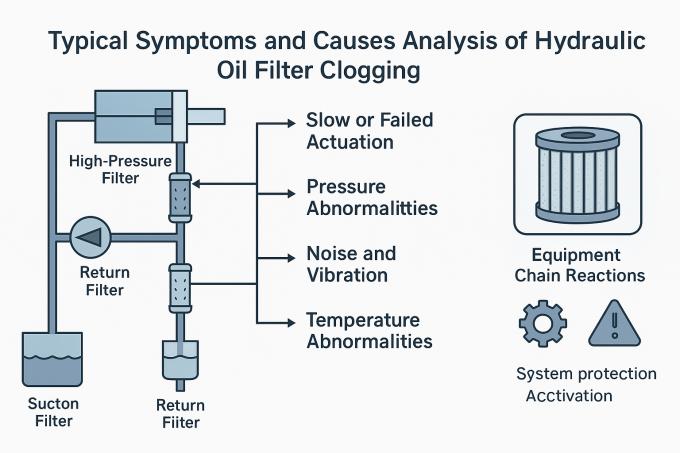
During operation, filter elements continuously capture contaminants from liquids or gases. Over time, particles gradually accumulate inside the filter media, reducing available filtration space.
When contamination levels become too high, the filter may experience increased resistance and reduced flow efficiency. In severe cases, the filter element may become blocked, causing the system pressure to rise and affecting the normal operation of equipment.
This problem is especially common in industrial environments with heavy contamination, such as hydraulic machinery, steel processing equipment, chemical production lines, and dust collection systems.
The service life of a filter is not determined only by time. It is also affected by contamination concentration, operating frequency, fluid cleanliness requirements, and equipment conditions.
Using filter elements with larger filtration areas, stronger filter media, and better dirt-holding capacity can effectively extend replacement intervals. For example, pleated stainless steel filter cartridges provide a larger filtration area compared with traditional structures, allowing them to capture more contaminants while maintaining stable flow performance.
Installation Problems May Cause Premature Filter Failure
Correct installation is essential for ensuring filter performance. Even a well-designed filter element cannot work effectively if installation problems cause leakage, bypass, or improper sealing.
During installation, incorrect sealing, damaged O-rings, unsuitable connection dimensions, or incorrect installation direction may allow contaminated fluid to bypass the filter media. In this situation, contaminants can directly enter the protected equipment, reducing the effectiveness of the entire filtration system.
In addition, excessive force during installation may damage filter components, especially filter cartridges with plastic end caps, sealing rings, or precision structures.
Professional filter manufacturers usually provide detailed installation information and technical recommendations to help customers avoid these issues. Before replacing a filter element, users should confirm the original model, dimensions, connection type, and sealing requirements.
TOPEP supports customized filter production according to customers’ drawings, samples, and technical requirements, including different sizes, connection types, filter materials, and sealing structures.
Operating Conditions Beyond Filter Design Limits
Every industrial filter has specific operating limits. If actual working conditions exceed the original design requirements, filter performance and service life may be affected.
High temperature, excessive pressure fluctuations, aggressive chemical environments, or unsuitable filtration media can accelerate filter degradation.
For example, hydraulic filters operating under high pressure require strong mechanical structures to prevent collapse. Stainless steel filters used in chemical industries need excellent corrosion resistance. Melt filtration applications require filter elements that can maintain stable performance under high-temperature conditions.
Choosing a filter according to real operating conditions is more important than simply selecting a product with similar dimensions.
A professional filtration supplier can help customers analyze application requirements and recommend suitable filter materials, structures, and configurations.
Lack of Effective Maintenance Management
Although filters are consumable components, proper maintenance management can significantly improve their service life and filtration efficiency.
Many filter failures are not caused by product quality problems but by delayed replacement, irregular inspection, or improper operating practices.
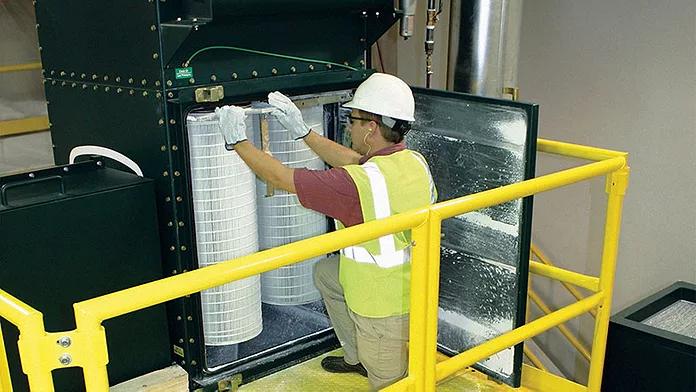
In critical industrial systems, operators usually monitor filter operating conditions through equipment performance, pressure changes, and maintenance records. Replacing filters at the appropriate time helps prevent sudden system shutdowns and protects expensive machinery.
For industries such as power generation, petrochemical, hydraulic equipment, and manufacturing, establishing a planned filter replacement strategy is an effective way to reduce unexpected failures.
TOPEP provides filtration products for various industrial applications and can assist customers with suitable replacement recommendations according to equipment models and working environments.
How to Reduce Industrial Filter Failure Risk
Reducing filter failure requires cooperation between proper product selection, correct installation, suitable operation, and regular management.
A reliable filtration system should not only remove contaminants effectively but also maintain stable performance throughout its service life. Working with an experienced filter manufacturer allows customers to obtain solutions that match their specific requirements instead of using standard products that may not fit their applications.
With more than 20 years of filtration experience, TOPEP provides customized industrial filtration solutions for global customers. The company offers hydraulic filter elements, air filtration products, stainless steel filters, oil purification filters, and industrial replacement filters with flexible customization options.
From material selection and structural design to production and quality inspection, TOPEP focuses on delivering stable and reliable filtration products for different industrial environments.
- Stainless Steel Filter Cartridge Applications in High Temperature Industries
- How to Select the Right Industrial Filter Element for Your Application
- How to Identify the Right Replacement Filter Element
- Air Purifier Filter Replacement: When and How to Replace Your Filter
- How to Choose the Right Filter Media for Industrial Filtration
- How Filter Differential Pressure Affects Performance and Service Life
- Sintered Filter vs Wire Mesh Filter: Which One Is Better?
- How Does a Coalescing Filter Work?