
How to Select the Right Industrial Filter Element for Your Application
Selecting the right industrial filter element is essential for maintaining equipment reliability, improving filtration efficiency, and reducing unexpected downtime. In industrial systems, filter elements are responsible for removing contaminants from liquids or gases and protecting important components such as pumps, valves, compressors, and hydraulic equipment.
However, choosing a suitable filter element is not simply a matter of selecting a filter with the same size or filtration rating. The correct solution depends on many factors, including the filtration medium, contaminant type, filtration accuracy, operating pressure, temperature, flow rate, installation method, and maintenance requirements.
For replacement projects, customers also need to consider compatibility with the original equipment, including dimensions, sealing method, filter material, and connection design.
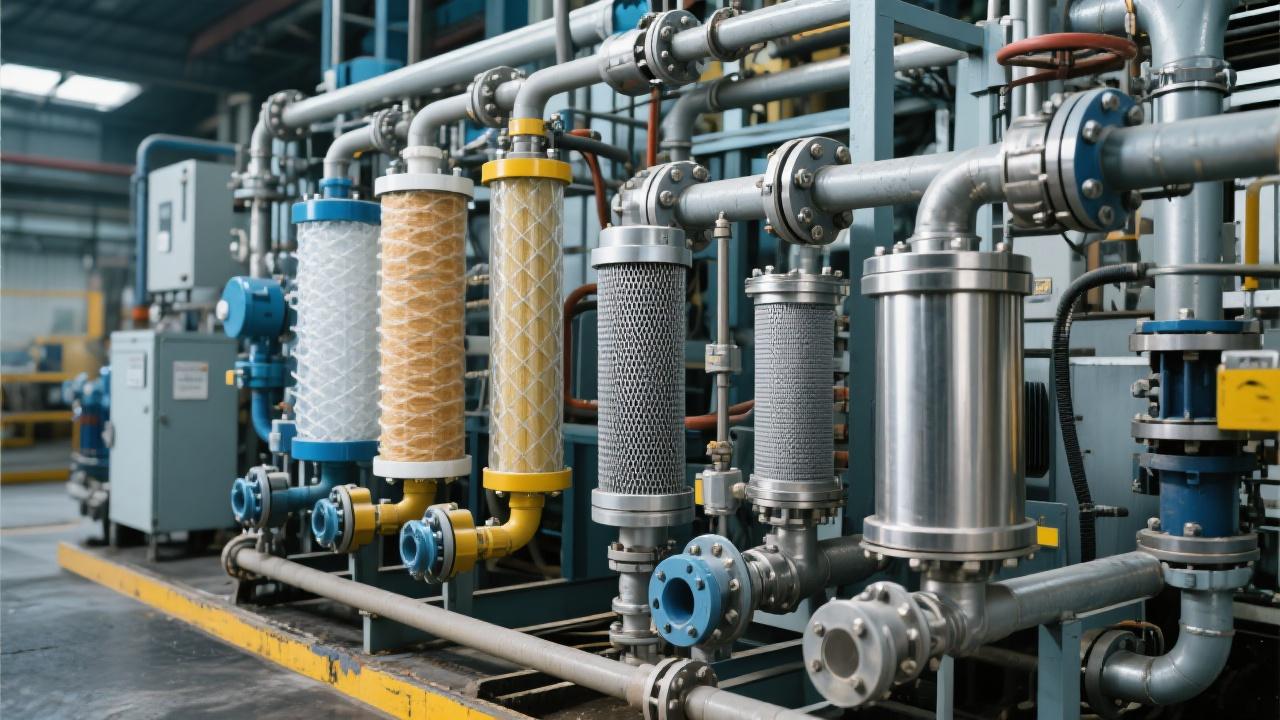
Identify Your Filtration Application and Working Medium
The first step when selecting an industrial filter element is understanding what needs to be filtered and what equipment needs protection.
Different applications require different filter structures and materials.
1. Hydraulic Oil Filtration
Hydraulic systems require high-performance filter elements to remove metal particles, dust, and other contaminants that may damage sensitive hydraulic components.
For hydraulic applications, important selection factors include:
•Required cleanliness level
•Filtration accuracy
•Working pressure
•Flow rate
•Filter media type
2. Oil and Lubrication Filtration
Oil filter elements are widely used in compressors, industrial machinery, lubrication systems, and power equipment. They help maintain oil cleanliness and reduce wear caused by contamination.
The suitable oil filter should provide:
•Efficient particle removal
•Good dirt-holding capacity
•Stable pressure performance
•Long service life
3. Gas and Air Filtration
Gas filtration systems require filter elements capable of removing solid particles, dust, rust, and oil mist from gas streams.
Common applications include:
•Natural gas pipelines
•Gas processing equipment
•Air compressors
•Industrial gas systems
Different gas applications may use:
•Felt filter elements
•Coalescing filter cartridges
•Stainless steel filter elements
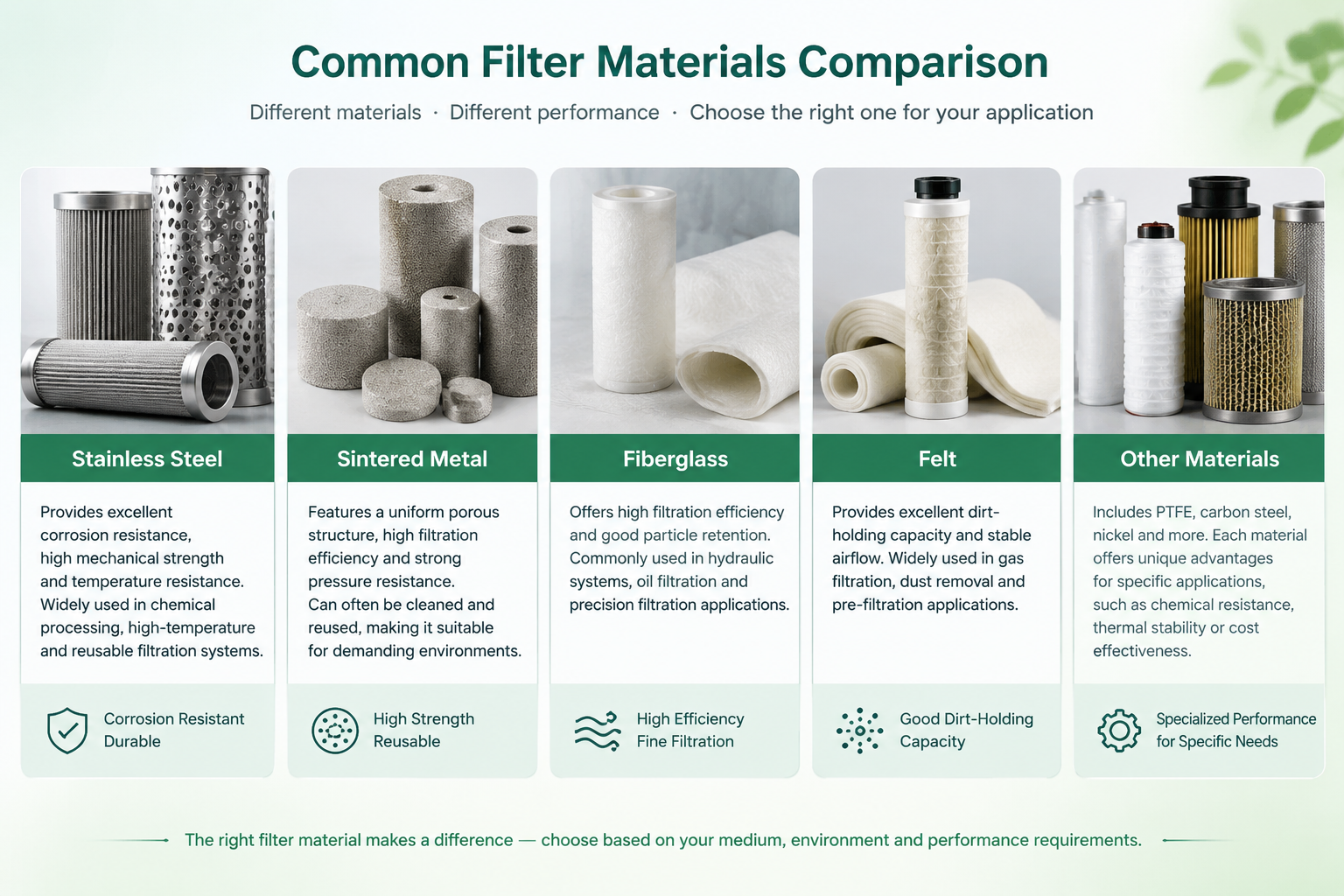
Select the Suitable Filter Material
The filter material determines the durability, filtration efficiency, and application range of the filter element.
Stainless steel filter elements are widely used in applications requiring corrosion resistance and high mechanical strength. Sintered metal filters provide a uniform porous structure and can often be cleaned and reused, making them suitable for demanding industrial environments. Felt and fiberglass filter media are commonly selected for gas, oil, and precision filtration applications.
The best filter material depends on the working medium, temperature, chemical compatibility, and required service life.
How to Select a Replacement Filter Element
Filtration accuracy is one of the most important factors when selecting an industrial filter element. A lower micron rating can remove smaller particles, but an overly fine filter may increase pressure drop and affect flow performance.
The ideal filtration rating should balance filtration efficiency and system requirements. At the same time, working pressure, temperature, and flow rate should also be considered to ensure the filter can operate safely and efficiently.
For replacement filter projects, customers should consider more than just the original model number. The filter dimensions, connection type, sealing design, filter material, and filtration accuracy all need to match the equipment requirements.
Providing the original filter photo, part number, drawing, or sample can help manufacturers identify the correct replacement solution quickly.
TOPEP provides customized replacement filter elements according to customer requirements, including dimensions, materials, filtration ratings, and connection designs.
- How to Improve Dust Collection Efficiency
- Why Do Industrial Filters Fail?
- Stainless Steel Filter Cartridge Applications in High Temperature Industries
- How to Identify the Right Replacement Filter Element
- Air Purifier Filter Replacement: When and How to Replace Your Filter
- How to Choose the Right Filter Media for Industrial Filtration
- How Filter Differential Pressure Affects Performance and Service Life
- Sintered Filter vs Wire Mesh Filter: Which One Is Better?