
How Filter Differential Pressure Affects Performance and Service Life
What Is Filter Differential Pressure?
Filter differential pressure, also called pressure drop, is the pressure difference between the inlet and outlet of a filter.
Differential Pressure = Inlet Pressure − Outlet Pressure
A new and clean filter normally has a relatively low pressure drop. As dust, particles, oil contaminants and other impurities accumulate on the filter media, flow resistance increases and the differential pressure gradually rises. Monitoring pressure drop provides an easy way to understand the condition of a filter during operation.
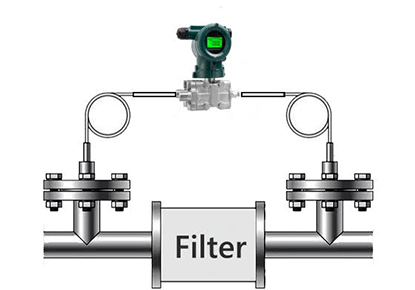
Why Does Filter Differential Pressure Increase?
A rising pressure drop is usually related to increased flow resistance. Several factors can affect differential pressure during operation.
1. Contaminant Loading
As particles and contaminants accumulate on the filter media, the available flow passages become increasingly restricted. This causes the resistance of the filter to increase.
For dust collection systems, accumulated dust can gradually form a dust layer on the filter surface. In hydraulic systems, solid particles and other contaminants can accumulate inside the filter element.
2. Excessive Flow Rate
A filter operating above its recommended flow capacity may produce a higher initial pressure drop.
Therefore, filter selection should consider not only the required filtration rating but also the actual system flow rate.
3. Filter Media and Filtration Rating
Different filter media have different flow characteristics. A finer filtration rating may provide higher contaminant capture efficiency, but it can also increase flow resistance depending on the filter design and effective filtration area.
The appropriate balance between filtration efficiency and pressure drop should therefore be considered during filter selection.
4. Fluid Viscosity
For liquid filtration systems, fluid viscosity can significantly influence flow resistance.
For example, high-viscosity hydraulic or lubrication oil may create greater resistance when passing through the filter, particularly during cold starts.
5. Insufficient Filtration Area
A filter with insufficient effective filtration area may experience a higher flow velocity through the media.
Increasing the effective filtration area can help reduce flow resistance and improve the filter's flow capacity.
How Differential Pressure Affects Filter Performance
Differential pressure is closely related to filtration performance and system efficiency.
When pressure drop remains within the recommended range, the filter can maintain stable filtration and flow. However, excessive differential pressure may cause:
►Reduced fluid or air flow
►Increased energy consumption
►Lower equipment efficiency
►More frequent filter maintenance
For hydraulic systems, excessive pressure drop may affect oil circulation. In dust collection systems, a loaded filter cartridge can restrict airflow.
Selecting the right filter according to the application can help balance filtration efficiency and pressure drop.
How to Control Differential Pressure and Extend Filter Life
Proper filter selection and regular monitoring can help control differential pressure and extend filter service life.
Choose the filter according to the required flow rate, filtration rating, filter media, operating pressure, temperature and contaminant level.
When differential pressure gradually increases, it usually indicates that contaminants are accumulating. If the pressure drop reaches the recommended replacement level, replacing the filter element in time can restore normal flow resistance.
For customized applications, filter dimensions, materials, filtration ratings and structures can also be adjusted according to specific operating conditions.
Choose the Right Filter for Your Application
Differential pressure is an important factor when evaluating filter performance, but it should not be considered alone.
A suitable filter should provide the required filtration efficiency while maintaining stable flow and acceptable pressure drop.
TOPEP provides industrial filter elements for hydraulic oil filtration, dust collection, coalescing separation and other applications. Customized solutions are available based on filter dimensions, materials, filtration requirements and operating conditions.
Need a customized filter? Contact our team to discuss your application and filtration requirements.
- Stainless Steel Filter Cartridge Applications in High Temperature Industries
- How to Select the Right Industrial Filter Element for Your Application
- How to Identify the Right Replacement Filter Element
- Air Purifier Filter Replacement: When and How to Replace Your Filter
- How to Choose the Right Filter Media for Industrial Filtration
- Sintered Filter vs Wire Mesh Filter: Which One Is Better?
- How Does a Coalescing Filter Work?
- Hydraulic Filter Maintenance Guide: How to Extend Equipment Life and Reduce Downtime