
How Does a Coalescing Filter Work?
What Is a Coalescing Filter?
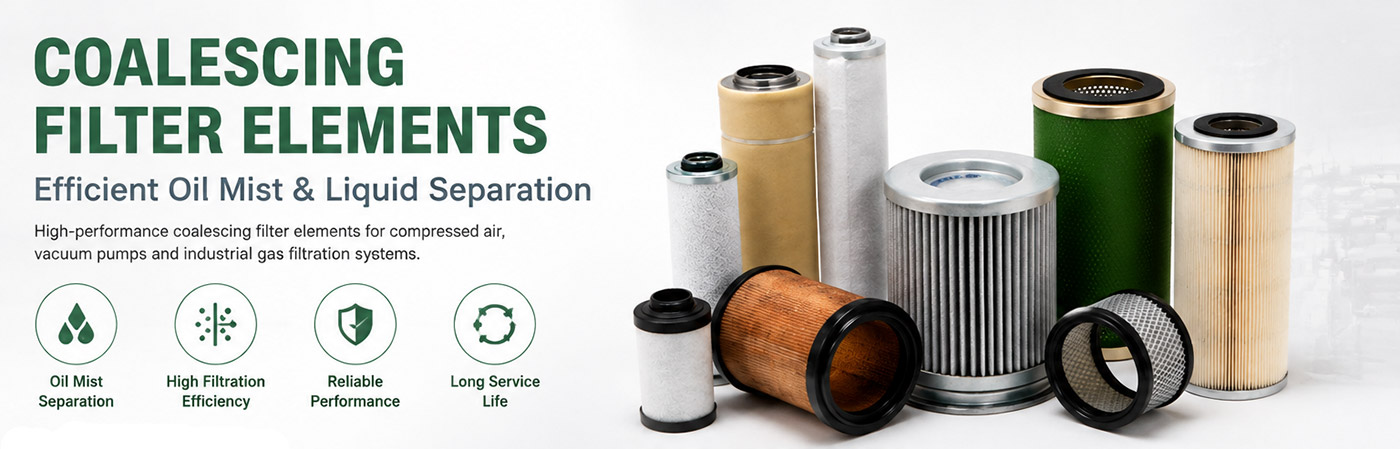
A coalescing filter is a specialized filtration element designed to remove oil mist, liquid droplets and aerosols from compressed air and gas systems.
Unlike traditional particle filters, coalescing filters combine tiny droplets into larger droplets for efficient separation.
How Does a Coalescing Filter Work?
Working Principe of Coalescing Filter:
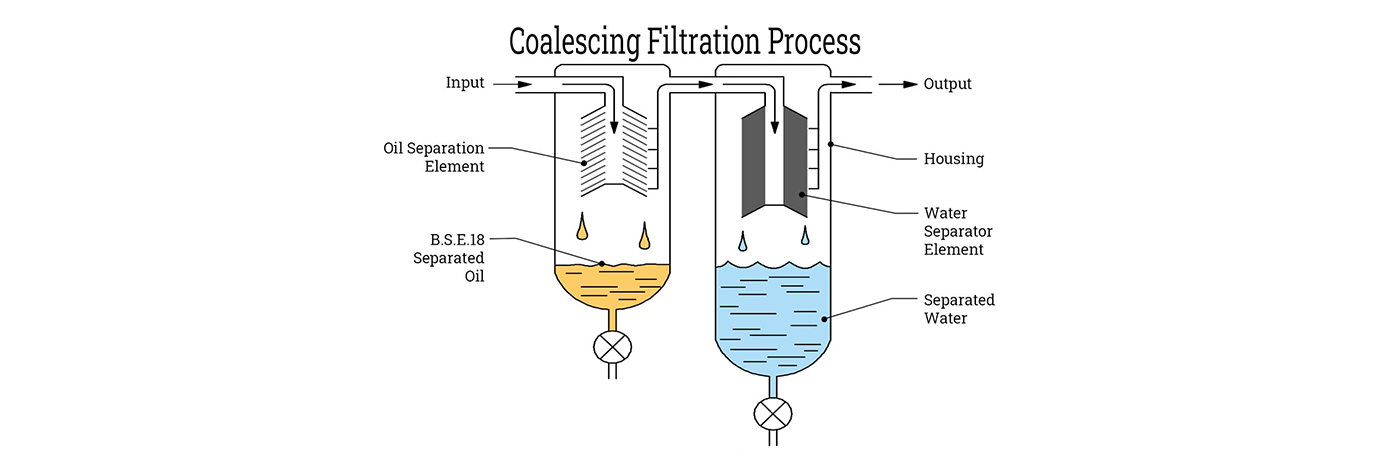
1. Capture: Fine liquid particles enter the filter media and are trapped by the micro fiber structure
2. Coalescence: Small droplets combine and become larger droplets.
3. Separation: Large droplets move to the drainage area and are removed from the gas stream.
Structure of Coalescing Filter Element
A high-performance coalescing filter element is designed with multiple layers of filtration materials to achieve efficient oil mist and liquid aerosol separation. Each component plays an important role in maintaining filtration efficiency, mechanical strength, and long-term operating stability.
Unlike standard particulate filters, coalescing filters require specially designed media that can capture extremely small liquid droplets and allow them to merge into larger droplets for easy drainage.1. Coalescing Filter Media
The coalescing media is the core component of the filter cartridge. It usually adopts fine fiber materials such as fiberglass, PTFE membrane, or composite filtration media.The three-dimensional porous structure allows contaminated gas to pass through while trapping tiny oil droplets and liquid particles. During operation, these small droplets gradually combine into larger droplets through the coalescing process.
2. Inner and Outer Support Layers
The support layers provide mechanical protection for the filter media and prevent deformation under pressure.
High-quality coalescing filter cartridges often use stainless steel mesh or perforated metal plates as support structures, ensuring stable performance under continuous operation.These support layers also help maintain uniform airflow distribution, reducing pressure drop and extending service life.
3. End Caps and Sealing System
The end caps connect the filter element with the filter housing and ensure proper installation.
The sealing materials, such as NBR, FKM, or other customized materials, prevent contaminated air from bypassing the filter media.A reliable sealing design is essential for maintaining separation efficiency and protecting downstream equipment.
Customized Filtration Solutions for Different Industrial Requirements
Different industries have different filtration challenges. Standard filter elements may not always meet specific equipment requirements.
TOPEP provides customized coalescing filter cartridges based on customer applications.Customization options include:
1. Customized Dimensions
Filter diameter, length, and installation structure can be produced according to equipment requirements.2. Customized Materials
Different filter media, support materials, and sealing materials can be selected for different working conditions.3. Customized Performance
Filtration accuracy, pressure resistance, and separation efficiency can be optimized according to customer needs.4. OEM Replacement Service
TOPEP provides replacement filter elements for different brands and industrial filtration systems.
Contact us for customized hydraulic filter solutions.
- Stainless Steel Filter Cartridge Applications in High Temperature Industries
- How to Select the Right Industrial Filter Element for Your Application
- How to Identify the Right Replacement Filter Element
- Air Purifier Filter Replacement: When and How to Replace Your Filter
- How to Choose the Right Filter Media for Industrial Filtration
- How Filter Differential Pressure Affects Performance and Service Life
- Sintered Filter vs Wire Mesh Filter: Which One Is Better?
- Hydraulic Filter Maintenance Guide: How to Extend Equipment Life and Reduce Downtime