
Hydraulic Filter Maintenance Guide: How to Extend Equipment Life and Reduce Downtime
Hydraulic systems are widely used in construction machinery, manufacturing equipment, agricultural machines, and industrial automation systems. Clean hydraulic oil is essential for maintaining stable operation and extending the service life of hydraulic components.
However, contamination caused by dust, metal particles, moisture, and other impurities is one of the main reasons for hydraulic system failures. A reliable hydraulic filter cartridge helps remove contaminants, protect critical components, and improve equipment reliability.
This guide explains the importance of hydraulic filter maintenance and how proper filtration practices can reduce downtime and maintenance costs.
Why Hydraulic Filtration Is Important?
Hydraulic components such as pumps, valves, and cylinders require clean oil to operate efficiently. Even small particles can cause wear and reduce system performance because hydraulic systems usually work under high pressure and tight tolerances.
A high-quality hydraulic oil filter provides several important benefits:
1. Reduce Component Wear: Contaminated oil contains abrasive particles that can damage precision components through continuous friction. Effective filtration removes these particles before they circulate through the hydraulic system, helping extend component life.
2. Improve Equipment Performance: Clean hydraulic oil allows hydraulic components to operate smoothly, maintaining stable pressure, better response speed, and improved system efficiency.
3. Prevent Unexpected Downtime: Regular inspection and timely replacement of hydraulic filter elements can help prevent equipment failures and reduce costly production interruptions.
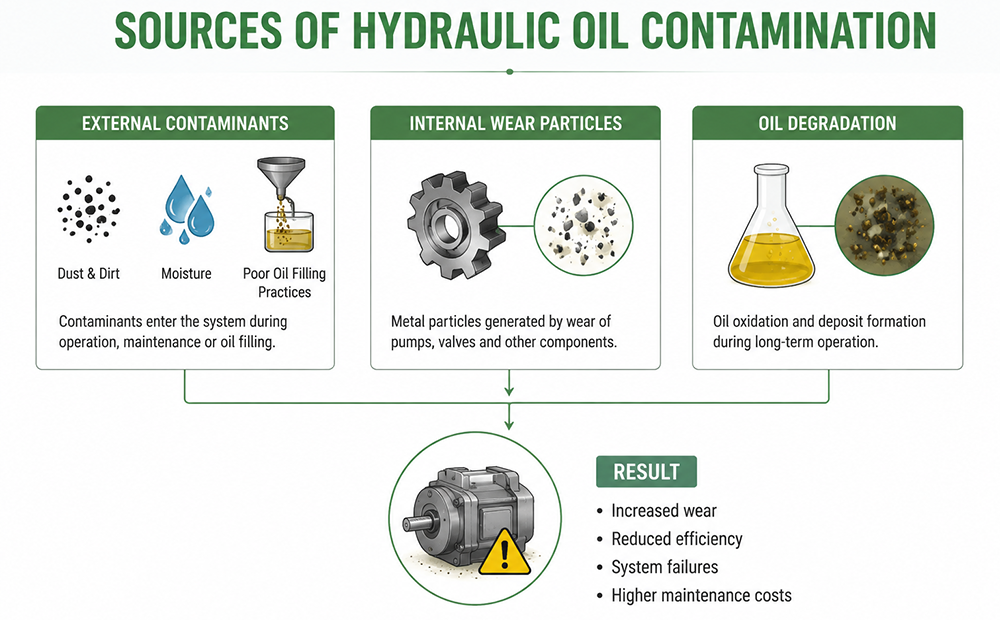
Common Causes of Hydraulic Oil Contamination?
Understanding contamination sources is the first step in effective hydraulic system maintenance.
1. External Contaminants: Dust, dirt, and moisture can enter hydraulic systems during operation, maintenance, oil filling, or through damaged seals.
2. Internal Wear Particles: Friction between hydraulic components may generate metal particles during operation. Without proper filtration, these particles can continue damaging pumps, valves, and other components.
3. Oil Degradation: Long-term operation may cause hydraulic oil oxidation and deposit formation. Regular oil inspection helps maintain oil quality and system performance.
How to Maintain Hydraulic Filters Properly?
1. Inspect Filter Condition Regularly
Regular inspection helps ensure the hydraulic filter cartridge is working effectively.Common warning signs include:
► Increased pressure drop
► Reduced hydraulic performance
► Unusual equipment noise
► Higher operating temperature
Many hydraulic systems use differential pressure indicators to show when a filter needs replacement.
2. Replace Hydraulic Filter Elements at the Right Time
Replacing filters too early increases maintenance costs, while replacing them too late may allow contaminants to damage the hydraulic system.The replacement cycle depends on:
| Factor | Influence |
| Working environment | Dusty conditions require more frequent replacement |
| Oil cleanliness | Contaminated oil reduces filter service life |
| Operating hours | Heavy-duty applications need closer monitoring |
| Filter capacity | Higher dirt holding capacity extends service life |
3. Select the Correct Hydraulic Filter Cartridge
Choosing the right filter element is essential for reliable filtration performance.Important factors include:
| Selection Accuracy | Description |
| Filtration Accuracy | Choose suitable micron ratings according to system requirements |
| Filter Material | Select materials based on oil compatibility and working conditions |
| Pressure Rating | Ensure the filter meets system pressure requirements |
| Temperature Resistance | Choose suitable materials for operating temperatures |
Common filter materials include stainless steel mesh, stainless steel fiber felt, fiberglass, and filter paper.
For demanding industrial applications, stainless steel hydraulic filter cartridges provide excellent strength, corrosion resistance, and long service life.
FAQ About Hydraulic Filters
Q1: How often should hydraulic filters be replaced?
Replacement frequency depends on operating conditions, contamination levels, oil quality, and equipment working hours. Regular inspection is the best way to determine replacement timing.Q2: Can hydraulic filter cartridges be cleaned and reused?
Some stainless steel hydraulic filter cartridges can be cleaned and reused depending on the filter material and application requirements.
Q3: What filtration accuracy should I choose for a hydraulic filter?
The required micron rating depends on system design and cleanliness requirements. Common options include 3μm, 5μm, 10μm, and 20μm.Customized Hydraulic Filtration Solutions
Proper hydraulic filtration is essential for improving equipment reliability and reducing maintenance costs.
TOPEP provides customized hydraulic filter cartridges and industrial filtration solutions for hydraulic systems, machinery, and special operating environments.
With professional manufacturing capabilities and filtration experience, TOPEP helps customers achieve efficient, stable, and long-lasting filtration performance.
Contact us for customized hydraulic filter solutions.
- How to Select the Right Industrial Filter Element for Your Application
- How to Identify the Right Replacement Filter Element
- Air Purifier Filter Replacement: When and How to Replace Your Filter
- How to Choose the Right Filter Media for Industrial Filtration
- How Filter Differential Pressure Affects Performance and Service Life
- Sintered Filter vs Wire Mesh Filter: Which One Is Better?
- How Does a Coalescing Filter Work?
- How to Choose Dust Collector Air Filters and Extend Their Lifespan