
Why Does Your Hydraulic Oil Filter Clog Frequently?
Hydraulic systems are widely used in industrial machinery, construction equipment, manufacturing lines, and agricultural equipment. To maintain stable performance and protect critical components, hydraulic oil must remain clean and free from excessive contamination.
However, frequent hydraulic oil filter clogging is a common problem that can increase maintenance costs, reduce equipment efficiency, and affect system reliability.
If a hydraulic filter becomes clogged shortly after replacement, simply installing another new filter may not solve the problem. The real cause could be excessive particle contamination, water ingress, oil degradation, unsuitable operating conditions, or incorrect filter selection.
In this article, we explain five common reasons why hydraulic oil filters clog frequently and provide practical solutions to improve filtration performance and extend filter service life.
1. How Does a Hydraulic Oil Filter Work?
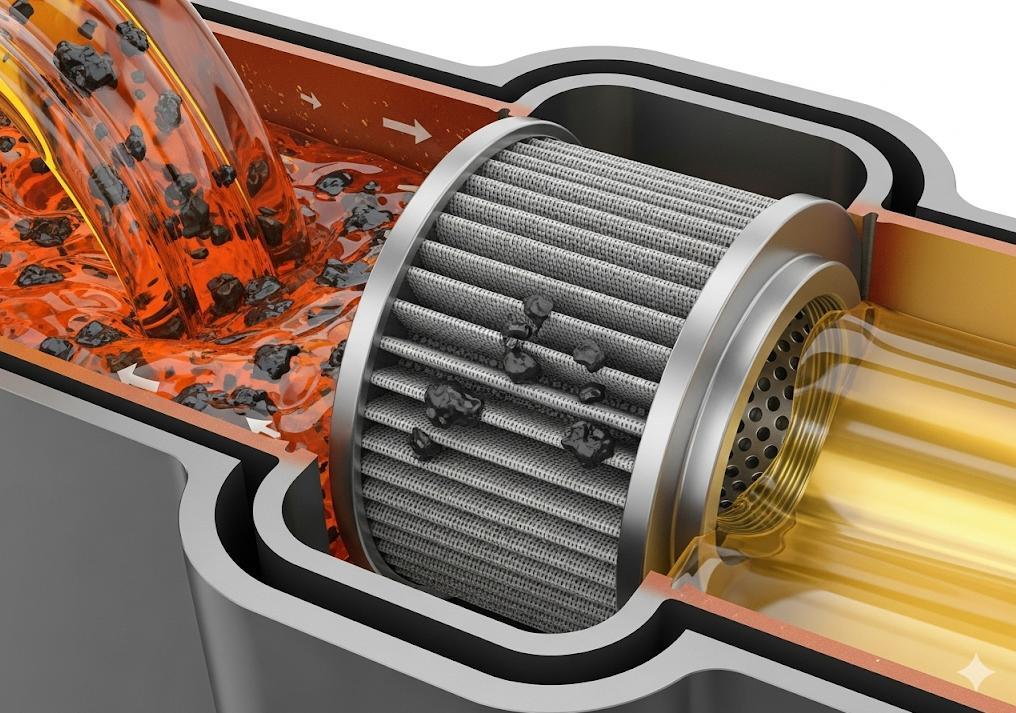
A hydraulic oil filter removes solid contaminants from hydraulic fluid before they can damage pumps, valves, cylinders, and other sensitive components.
As hydraulic oil passes through the filter media, particles are captured within the filtration structure, allowing cleaner oil to continue circulating through the system.
Common hydraulic filtration positions include:
| Filter Type | Installation Position | Main Function |
|---|---|---|
| Suction Filter | Before the hydraulic pump | Helps prevent large contaminants from entering the pump |
| Pressure Filter | After the hydraulic pump | Protects downstream hydraulic components |
| Return Line Filter | Before oil returns to the tank | Removes contaminants generated during operation |
| Offline Filter | Independent circulation loop | Continuously cleans hydraulic oil |
As contaminants accumulate inside the filter element, the available flow passages gradually become restricted. This increases the pressure difference between the inlet and outlet, known as differential pressure (ΔP).
When differential pressure reaches the specified limit, the filter may require replacement. If the system has a bypass valve, excessive pressure difference may cause oil to bypass the filter media.
Therefore, frequent filter clogging should be investigated rather than treated as a simple replacement issue.
2. Five Common Reasons Why Hydraulic Oil Filters Clog Frequently
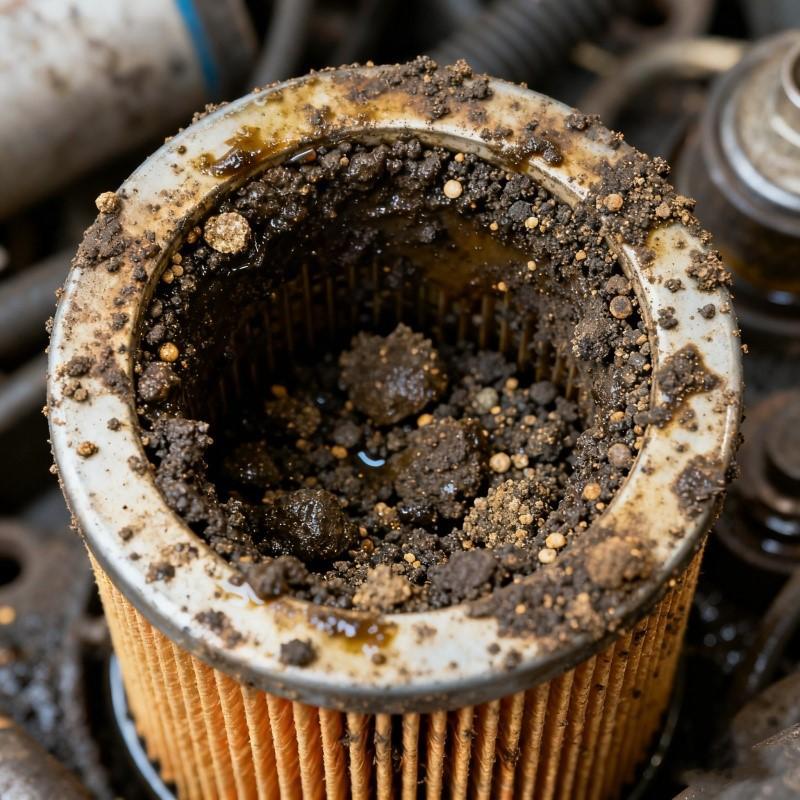
2.1 Excessive Solid Particle Contamination
Dust, sand, metal particles, rust, and other solid contaminants are among the most common causes of hydraulic filter clogging.
These particles may enter the system through damaged seals, reservoir breathers, contaminated hydraulic oil, or improper maintenance procedures. Internal wear of pumps, valves, and cylinders can also generate metal particles.
As contaminants accumulate in the filter media, filtration resistance increases and the filter gradually becomes blocked.
Solution:
-
Check reservoir breathers, seals, and hydraulic connections.
-
Inspect used filter elements for metal particles and other contaminants.
-
Keep hydraulic oil filling equipment clean.
-
Monitor oil cleanliness using particle counting methods.
-
Consider offline filtration or system flushing when necessary.
2.2 Water Contamination and Oil Oxidation
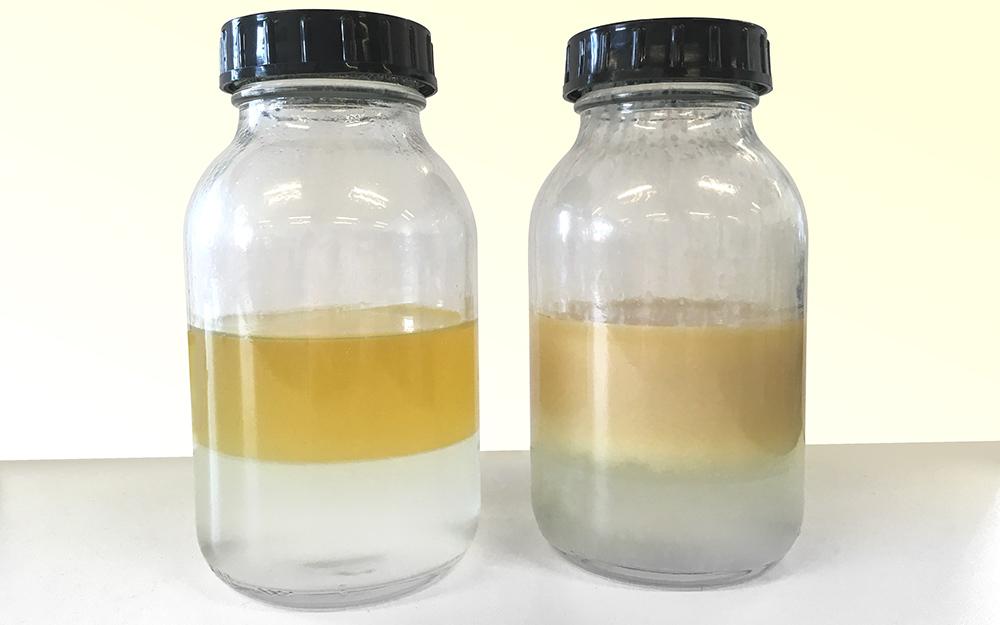
Water can enter hydraulic systems through condensation, leaking oil coolers, damaged seals, or contaminated maintenance equipment.
Water contamination may promote corrosion, reduce lubrication performance, and accelerate oil degradation.
Meanwhile, prolonged exposure to high temperatures and oxygen can cause hydraulic oil oxidation. Oxidation products may form sludge and varnish-like deposits that accumulate on filter media and contribute to premature clogging.
Solution:
-
Inspect oil coolers, tank seals, and reservoir breathers.
-
Conduct regular hydraulic oil condition testing.
-
Monitor operating temperatures and avoid prolonged overheating.
-
Use suitable dehydration equipment when water contamination is confirmed.
-
Replace severely degraded oil according to equipment recommendations.
It is important to note that conventional hydraulic oil filters are primarily designed for solid particle removal. They should not automatically be considered solutions for dissolved or emulsified water.
2.3 High Oil Viscosity During Cold Starts
Hydraulic oil becomes more viscous at low temperatures, increasing resistance to flow through the filter media.
During cold starts, this can cause a sudden increase in differential pressure, even when the filter element is relatively clean.
If the equipment operates under heavy loads before the oil reaches an appropriate temperature, the problem may become more serious.
Solution:
-
Follow the manufacturer's cold-start procedures.
-
Allow hydraulic oil to reach an appropriate operating temperature.
-
Use the recommended hydraulic oil viscosity grade.
-
Monitor differential pressure during startup and normal operation.
-
Check whether the filter bypass valve is functioning correctly.
2.4 Incorrect Hydraulic Filter Selection
Choosing an unsuitable hydraulic filter element can result in frequent clogging, insufficient filtration, or excessive pressure drop.
Common selection mistakes include:
-
Incorrect micron rating or filtration efficiency.
-
Insufficient effective filtration area.
-
Incompatible filter media.
-
Incorrect dimensions or connection types.
-
Unsuitable flow capacity or pressure rating.
A higher filtration rating does not automatically mean better performance. The filter must match the hydraulic system's cleanliness requirements, flow rate, oil viscosity, and operating conditions.
Solution:
Before selecting a replacement filter element, confirm the original model, dimensions, filtration rating, flow requirements, operating pressure, seal material, and hydraulic oil compatibility.
For special equipment, customized replacement hydraulic filter elements can be developed based on original samples, drawings, or technical specifications.
2.5 Excessive Flow Rate and Mechanical Wear
A hydraulic filter may also clog frequently when the actual flow rate exceeds its suitable capacity.
Excessive flow can increase pressure drop across the filter media. At the same time, worn pumps, damaged valves, deteriorating seals, and corroded pipelines may continuously generate new contaminants.
In these situations, replacing the filter alone will not eliminate the underlying problem.
Solution:
-
Compare actual system flow with the filter's rated capacity.
-
Inspect pumps, valves, cylinders, and pipelines.
-
Check the filter housing and bypass valve.
-
Investigate abnormal metal particles found in used filter elements.
-
Select a filter with suitable flow capacity and effective filtration area.
3. Warning Signs and How to Diagnose a Clogged Hydraulic Filter
Frequent filter clogging is not always visible from the outside. Monitoring system performance and differential pressure is important for identifying potential problems.
| Warning Sign | Possible Cause | Recommended Action |
|---|---|---|
| High differential pressure | Contamination or high oil viscosity | Check oil cleanliness and temperature |
| Filter clogging alarm | Excessive filter restriction | Inspect the filter element |
| Reduced system performance | Flow restriction or other system faults | Check the filter and hydraulic circuit |
| Frequent filter replacement | Excessive contamination or incorrect selection | Review oil condition and filter specifications |
| Unusual pump noise | Possible suction restriction or cavitation | Inspect suction conditions and inlet filter |
Differential pressure can be calculated as:
ΔP = P inlet − P outlet
As contaminants accumulate, differential pressure generally increases under comparable operating conditions.
However, high differential pressure does not always mean that the filter is dirty. Cold oil, excessive flow, incorrect filter specifications, and other operating conditions can also increase pressure drop.
Always follow the filter manufacturer's recommended differential pressure limits and equipment maintenance instructions.
4. How to Prevent Frequent Hydraulic Filter Clogging
Preventing repeated filter blockage requires proper contamination control and filter maintenance.
The following practices can help improve hydraulic filtration performance:
1. Maintain proper oil cleanliness
Use regular particle counting to monitor hydraulic oil cleanliness. ISO 4406 provides a standardized method for reporting solid particle contamination levels in hydraulic fluids.
2. Prevent external contamination
Maintain reservoir breathers, seals, filling ports, and hydraulic connections to reduce the entry of dust and moisture.
3. Choose suitable filter media
Common hydraulic filter materials include cellulose, synthetic fiber, glass fiber, and stainless steel mesh. Selection should consider filtration efficiency, dirt-holding capacity, pressure drop, and oil compatibility.
4. Monitor oil condition
Regularly check oil viscosity, water content, oxidation, and particle contamination to identify potential problems before they affect equipment operation.
5. Establish a preventive maintenance plan
Combine operating hours, differential pressure monitoring, oil analysis, and manufacturer recommendations to determine appropriate filter replacement intervals.
Always follow the filter manufacturer's recommended differential pressure limits and equipment maintenance instructions.
- What Is the Difference Between an Oil Filter and a Hydraulic Filter?
- How to Improve Dust Collection Efficiency
- Why Do Industrial Filters Fail?
- Stainless Steel Filter Cartridge Applications in High Temperature Industries
- How to Select the Right Industrial Filter Element for Your Application
- How to Identify the Right Replacement Filter Element
- Air Purifier Filter Replacement: When and How to Replace Your Filter
- How to Choose the Right Filter Media for Industrial Filtration