
Sintered Filter vs Wire Mesh Filter: Which One Is Better?
Stainless steel filters are widely used in chemical processing, hydraulic systems, food and beverage production, pharmaceuticals, and other demanding industries due to their excellent corrosion resistance and durability.
Among various metal filtration solutions, stainless steel sintered filters and wire mesh filters are two commonly used options.
Although both are made from stainless steel materials, their filtration mechanisms, strength, and application advantages are different. Understanding the differences can help engineers and buyers select the most suitable filtration solution.
What Is a Stainless Steel Sintered Filter?
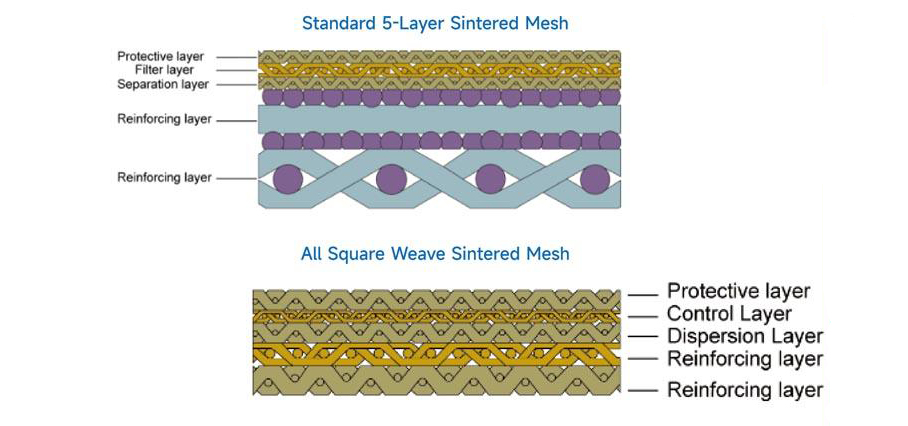
A stainless steel sintered filter is manufactured by combining multiple layers of stainless steel mesh through a high-temperature sintering process.The sintering process creates a stable porous structure, allowing the filter to provide consistent filtration accuracy and excellent mechanical strength.
Common materials include: Stainless Steel 304, Stainless Steel 316, Stainless Steel 316L
Main advantages: High pressure resistance, Excellent corrosion resistance, Stable filtration performance, Long service life, Reusable after cleaning
For industrial applications requiring durable and precise filtration, stainless steel sintered filters are an ideal choice.
What Is a Wire Mesh Filter?
A wire mesh filter is produced by weaving stainless steel wires into different mesh patterns.
The woven structure creates uniform openings that allow fluid or gas to pass through while capturing larger particles.
Common mesh types include: Plain weave, Twill weave, Dutch weave
Wire mesh filters are widely used for: Liquid filtration, Gas filtration, Hydraulic oil filtration, Pre-filtration applications
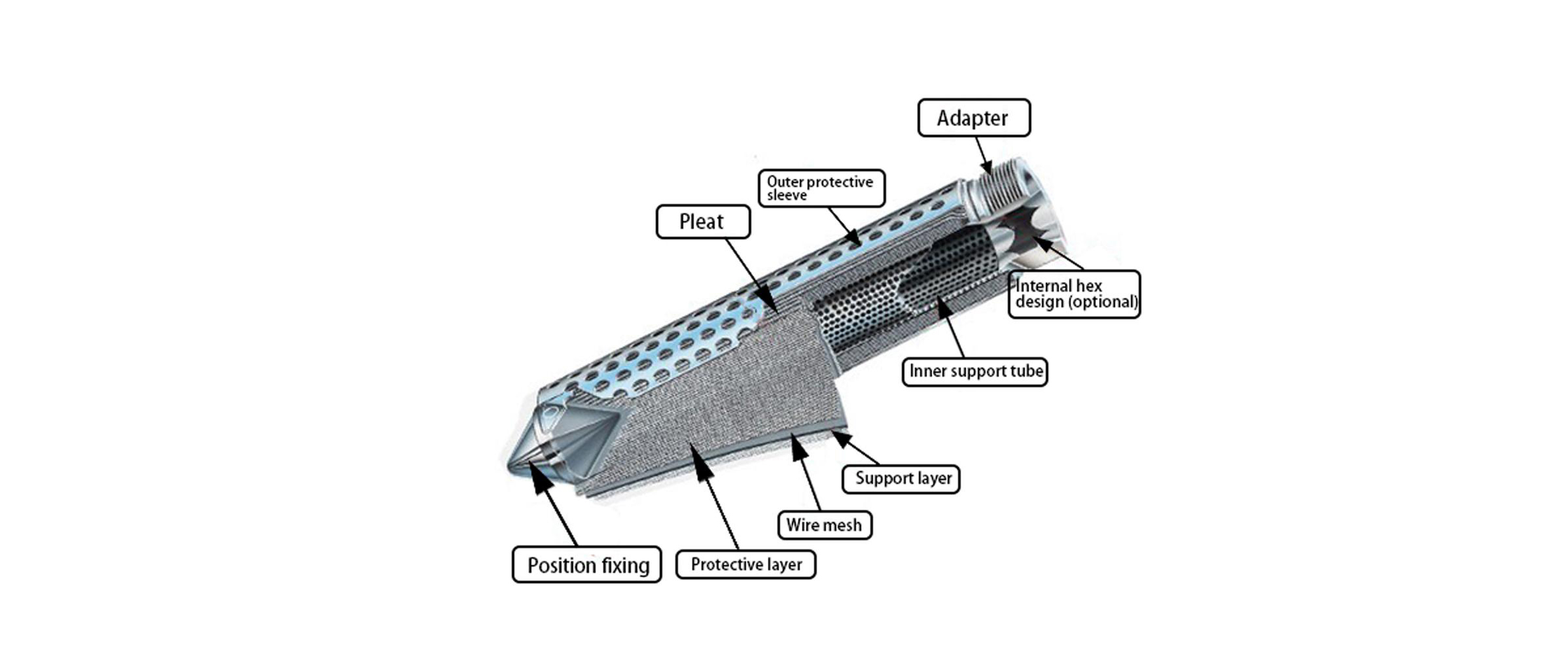
Stainless Steel Sintered Filter vs Wire Mesh Filter
| Feature | Stainless Steel Sintered Filter | Wire Mesh Filter |
|---|---|---|
| Structure | Multi-layer sintered structure | Woven wire mesh |
| Filtration Type | Depth filtration | Surface filtration |
| Accuracy | More stable precision | Depends on mesh opening |
| Dirt Holding Capacity | High | Medium |
| Pressure Resistance | Excellent | Good |
| Cleaning Method | Backwashing / Ultrasonic cleaning | Washing / Backwashing |
| Service Life | Long | Long |
| Cost | Higher | More economical |
- How Does a Coalescing Filter Work?
- Hydraulic Filter Maintenance Guide: How to Extend Equipment Life and Reduce Downtime
- How to Choose Dust Collector Air Filters and Extend Their Lifespan
- The Features of Sintered Mesh Filter Compared with Traditional Filter
- How to Choose a Suitable Hydraulic Oil Filter
- Types of Hydraulic Oil Filter Element
- Filtration Material of Hydraulic Oil Filter
- The function of the inner and outer skeletons of the hydraulic oil filter element